

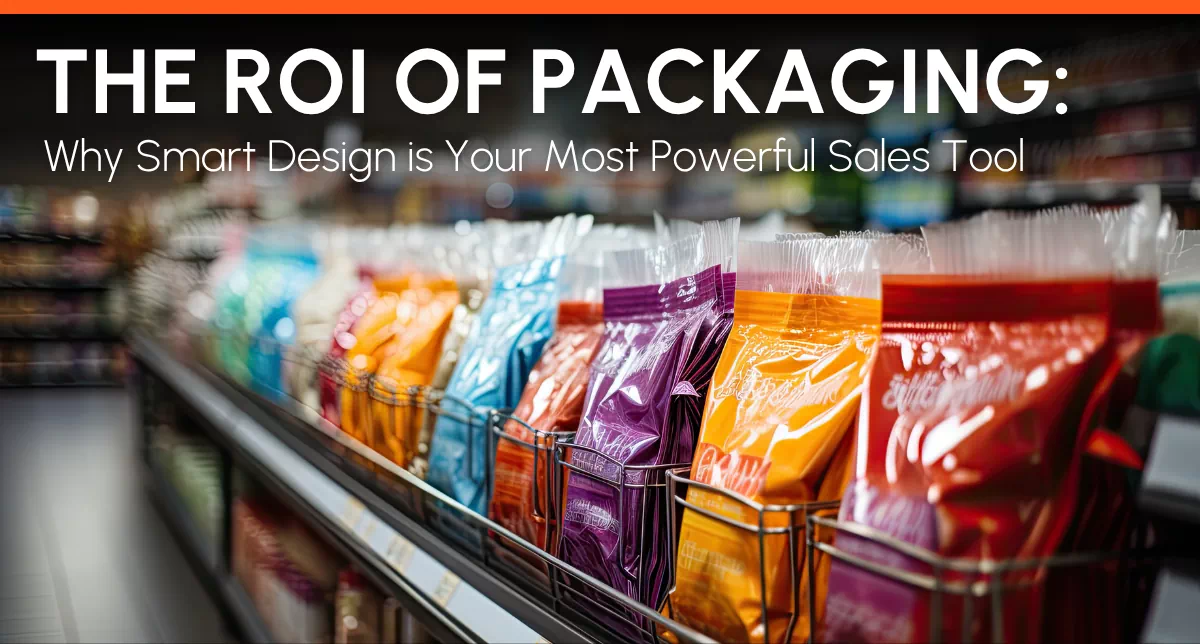
In today’s crowded retail environment, brands spend millions on marketing and advertising to stand out. But what if the most powerful sales tool was already in your hands, on every shelf, in every store, and in front of every potential customer?
Smart packaging design isn’t just about aesthetics; it’s a strategic business tool that influences purchase decisions, builds brand equity, and drives measurable ROI. The right packaging can turn casual browsers into buyers, boost brand recall, and even command premium pricing. So why do many brands still treat packaging as an afterthought?
Take a look at why packaging is your hardest-working, highest-reaching marketing asset and how thoughtful design can directly impact your bottom line.
Your product’s packaging touches every single shopper who sees it, a feat no other marketing channel can claim.
Unlike digital ads that consumers can scroll past or TV commercials that can be skipped, packaging is always present at the point of purchase, influencing buyers when it matters most. In fact, 72% of consumers say that a product’s packaging design influences their purchase decisions.
And in a split-second shopping environment, first impressions count. Research by Nielsen found that shoppers spend just 13 secondsdeciding on a product in-store with the majority taking less than 10 seconds to make that same decision online. Packaging that is visually appealing, informative, and emotionally engaging can tip the scales in your favour.
Takeaway: Packaging is a 24/7 salesperson working tirelessly to capture attention and convert sales.
Think of the last time you browsed the cereal aisle. With dozens of options to choose from, what made you reach for a specific brand? We’ve no doubt that it was a cleverly balanced mix of visual cues, messaging, and trust that swayed your decision.
Smart packaging design uses:
A famous example is Tropicana’s epic 2009 rebrand failure, in which a redesign removed familiar brand elements, leading to a $30M drop in sales in just two months. The lesson? Consumers buy with their eyes, and packaging consistency builds trust.
Takeaway: Strategic design helps your product win at shelf, cutting through the clutter and driving sales.
Many brands hesitate to invest in premium packaging, fearing higher costs. But what if the real cost is sticking with ineffective design that limits growth?
The numbers speak for themselves:
Great packaging can:
Takeaway: Smart packaging is an investment that pays off in increased sales, brand loyalty, and pricing power.
A common mistake? Designing packaging based on personal preferences instead of consumer insights.
Many brands fall into the “design-first, test-later” trap, where aesthetic decisions are made before considering consumer behaviour. But data-driven package design can significantly increase success rates and ensure that every package iteration is optimised before it hits the market, reducing costly rebrands and redesigns.
What Data-Driven Packaging Looks Like:
Takeaway: Data should drive design decisions, not just aesthetics. Consumer testing ensures your packaging performs before launch
Consumers aren’t just looking for eye-catching packaging; they want eco-conscious solutions.
A global survey by McKinsey revealed that up to 70% of consumers are willing to pay more for sustainable packaging, with a growing number of Gen Z and millennial consumers listing environmental impact as an important consideration when making purchasing decisions. Brands that fail to innovate risk losing relevance, and consumers.
Forward-thinking brands are investing in:
Takeaway: Sustainability is a competitive advantage that can drive preference, brand loyalty, and even cost savings.
In a world where consumers are bombarded with choices, it can make the difference between getting picked up or passed over.
From smart packaging with QR codes to AI-driven personalisation the future of packaging presents a world of exciting possibilities, and brands must embrace innovation if they are to be the ones that win at shelf, online, and in the hearts of consumers.
Smart brands aren’t leaving their most powerful sales tool to chance. Get in touch with us today to find out how we can help your brand stand out.